

contact@vericarelabs.com

Why is a 0.1ng/mL cutoff important?
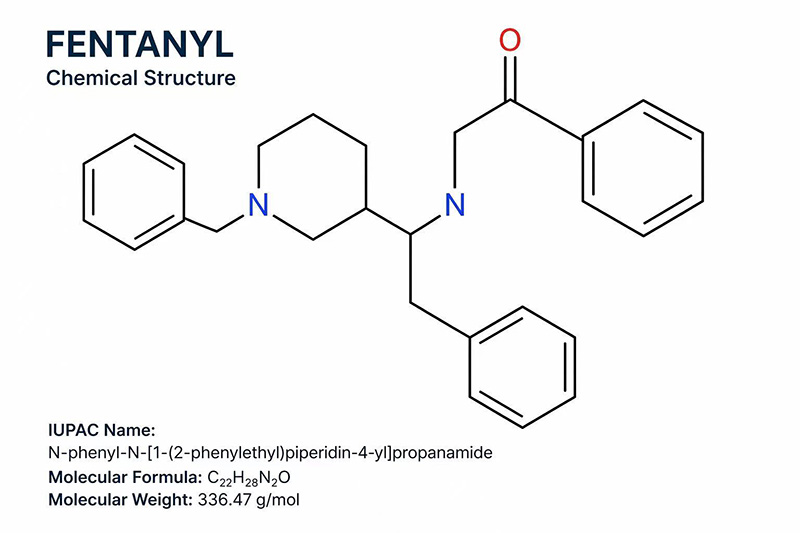
Fentanyl is a highly potent opioid with clinically relevant levels at extremely low (sub-ng/mL) concentrations¹. In oral fluid, these levels are significantly lower than in urine, making high analytical sensitivity essential. A cutoff of 0.1 ng/mL ensures detection aligns with clinically meaningful exposure.
Why Oral Fluid Is Different
Unlike urine which accumulates drugs over time, oral fluid reflects recent drug exposure through passive diffusion from plasma². As a result, fentanyl concentrations in oral fluid are significantly lower—typically around 10× lower than in urine³.
Clinical studies show fentanyl levels in oral fluid are generally in the low ng/mL range, with median concentrations of approximately 1.5 ng/mL in oral fluid vs. 13 ng/mL in urine. Even larger differences are observed for its metabolite, norfentanyl⁴. Controlled dosing studies further confirm similarly low oral fluid concentrations following fentanyl exposure⁵.
These findings highlight an important point: applying urine-based cutoffs (commonly ≥1 ng/mL) to oral fluid testing can significantly reduce detection sensitivity and may miss clinically relevant exposure.
Vericare's High-Sensitivity Approach
Vericare Laboratories leverages patented lab automation, magnetic bead–based extraction (mSPE), and LC–MS/MS to reliably detect fentanyl at very low concentrations.
• Oral fluid cutoff: 0.1 ng/mL
• Enables sensitive detection of recent exposure
• Maintains high specificity with mass spectrometry confirmation
This approach ensures more accurate and clinically meaningful fentanyl monitoring in oral fluid testing.
Reference
1. Stanley TH. The pharmacology of fentanyl and its analogs. Anesthesiology. 2014.
2. Lee D, Huestis MA. Current knowledge on cannabinoids in oral fluid. Drug Testing and Analysis. 2014.
3. Verstraete AG. Oral fluid testing for driving under the influence of drugs: history, recent progress and remaining challenges. Forensic Science International. 2005.
4. Kuhlman JJ et al. Fentanyl and norfentanyl concentrations in plasma, urine, and saliva after transdermal fentanyl administration. Journal of Analytical Toxicology. 2003.
5. Concheiro M, Shakleya DM, Huestis MA. Simultaneous quantification of fentanyl, norfentanyl, and metabolites in oral fluid following controlled opioid administration. Journal of Analytical Toxicology. 2010.